





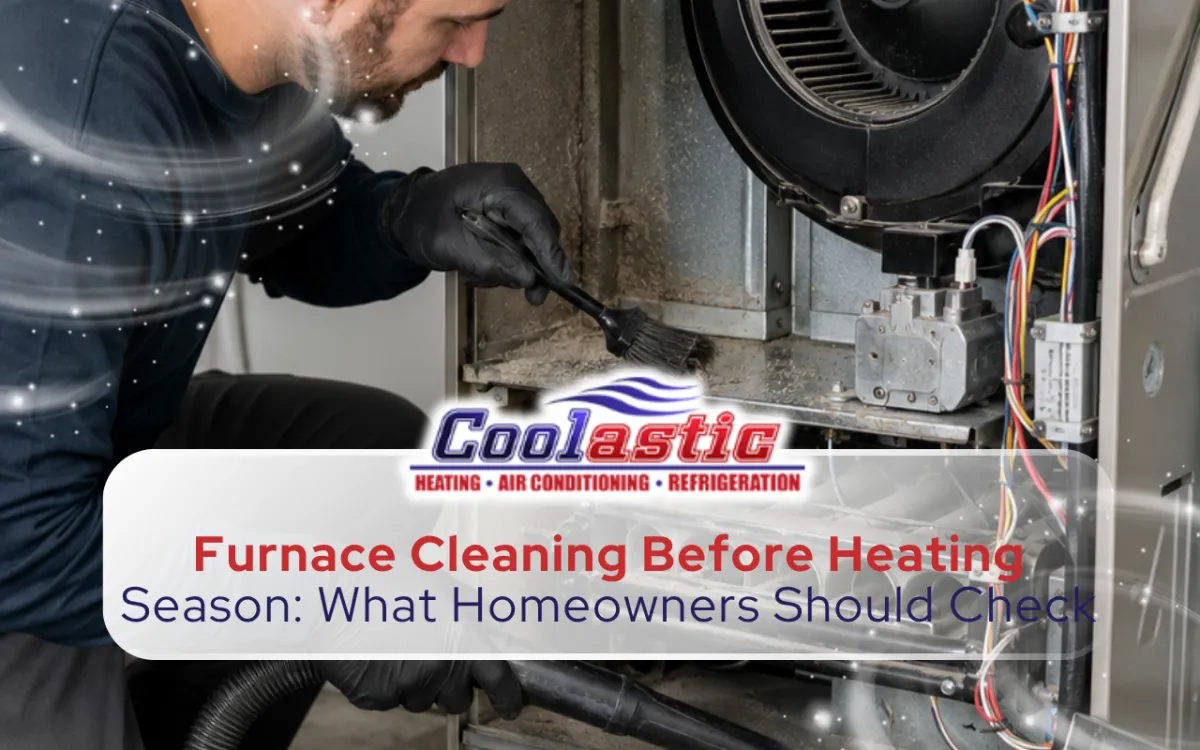
Furnace Cleaning Before Heating Season: What Homeowners Should Check
Regular furnace cleaning can help reduce dust buildup, support steadier airflow, and make it easier to spot developing problems before the coldest weather arrives. Request your furnace estimate if the system looks dusty, smells unusual, or has not been inspected before heating season.
At Coolastic Heating & Cooling Services, we bring residential and commercial HVAC experience since 1988 to preventive heating care, with free estimates and clear options when service is recommended.
Start With Areas That Collect Dust Fastest
Furnace dust buildup often appears around the blower compartment, filter area, return openings, and accessible cabinet surfaces. Dust does not always mean the furnace is failing, but it can make airflow and maintenance conditions worse.
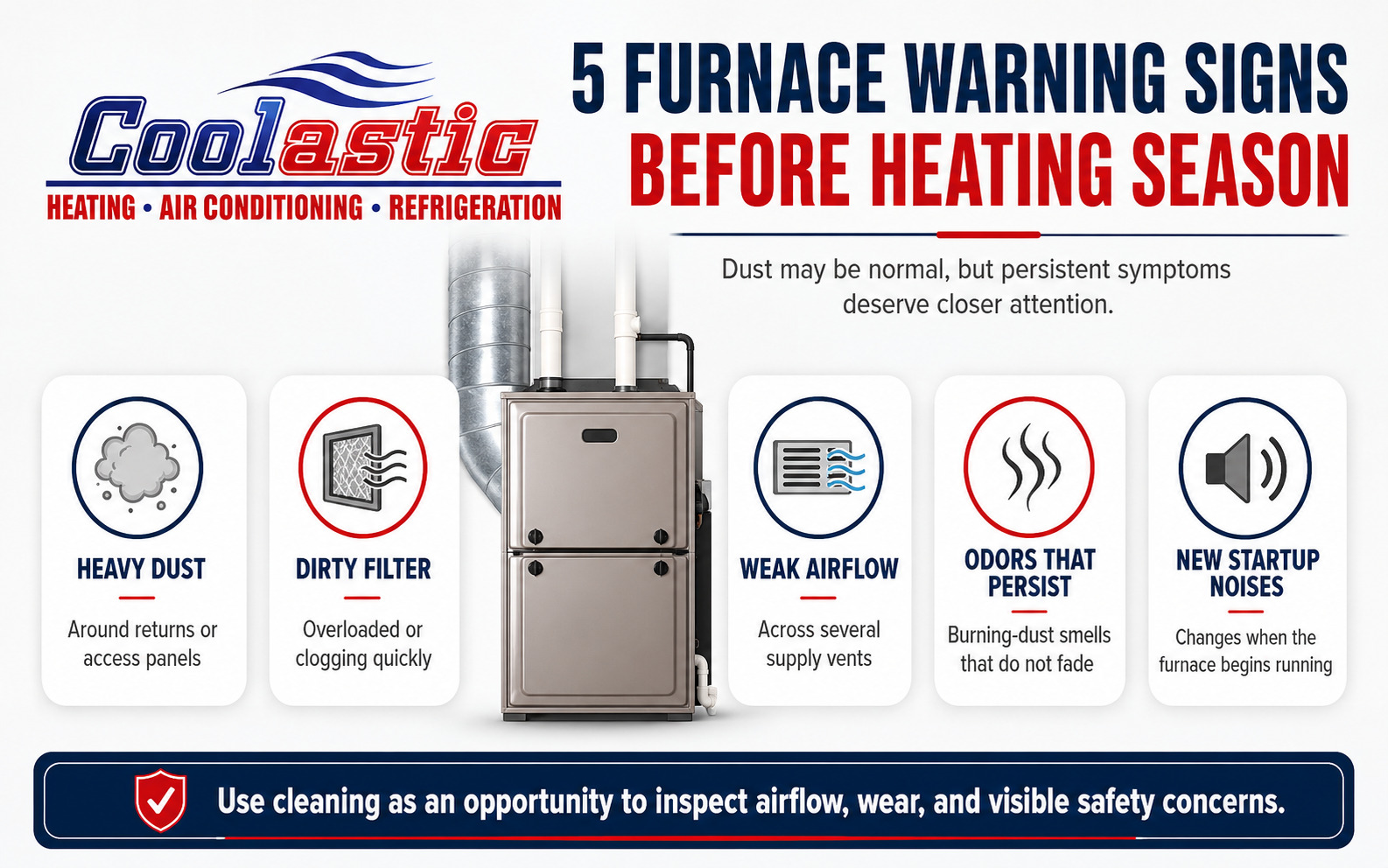
Visible Signs Worth Noting
Heavy dust around return grilles
Dirty or overloaded filters
Dust near blower access panels
Burning-dust odors that persist
Weak airflow from several vents
Know Why Blower Cleaning Matters
The blower moves heated air through the duct system. If the wheel, motor area, or filter path is heavily restricted, the system may move less air and run longer to satisfy the thermostat.
Blower cleaning cannot correct every airflow issue, but it can remove one source of unnecessary restriction. If weak airflow continues after basic maintenance, a furnace inspection may be needed.
Key Takeaway
Dust near filters, return grilles, and blower areas can affect airflow, but persistent symptoms should be inspected instead of treated as normal dirt.
Use Cleaning as a Furnace Inspection Opportunity
Schedule your heating inspection before the busy season if the system has not been checked recently. A technician can look for dust buildup, unusual wear, airflow concerns, and visible safety issues while cleaning appropriate components.
For repair-related concerns, review our Chicago furnace repair service page.
Separate Basic Cleaning From Technical Service
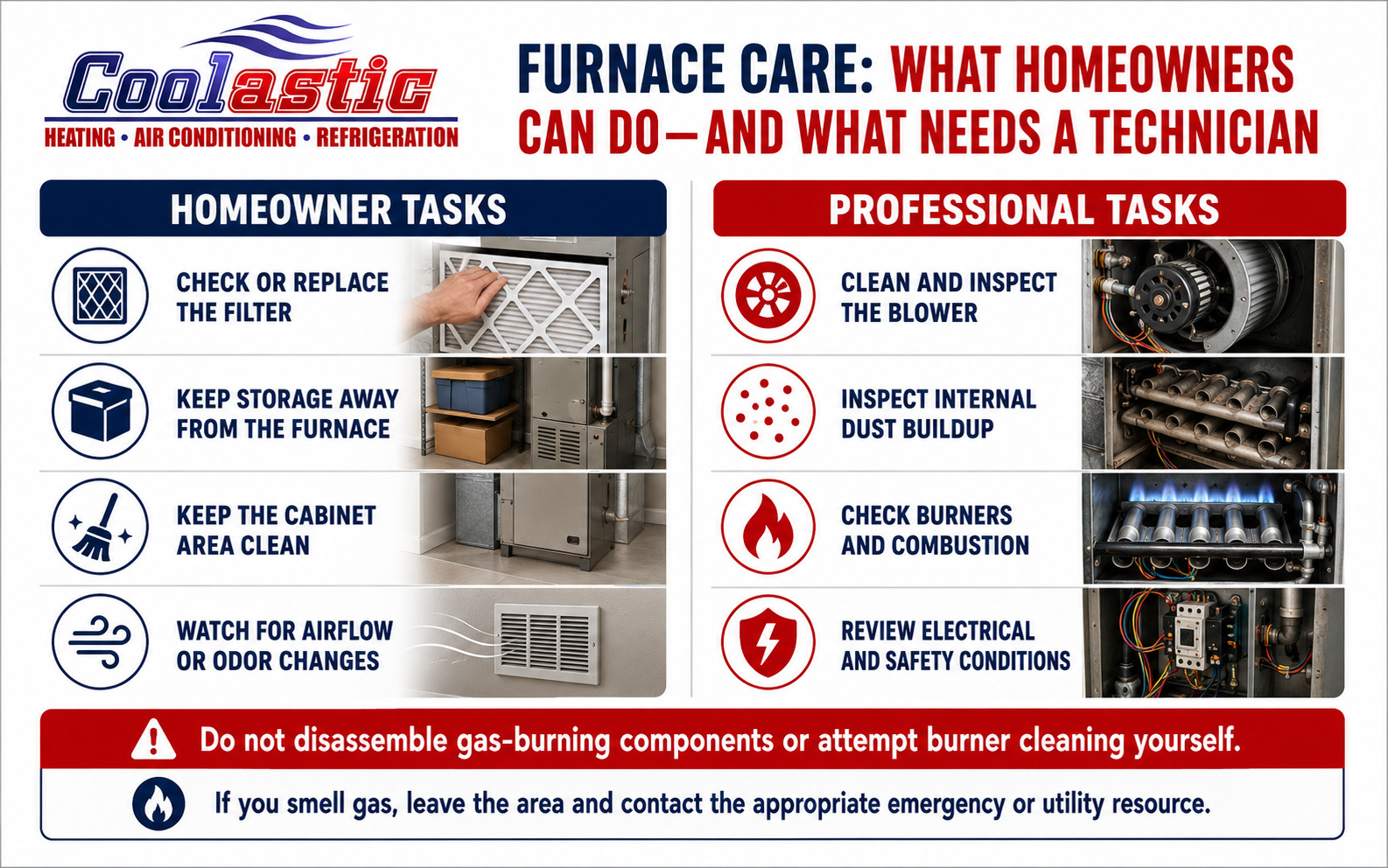
Some furnace cleaning tasks are simple, while others should be handled by qualified HVAC technicians. Homeowners can keep the area clear and monitor filters, but internal components need proper inspection.
Furnace Cleaning Responsibility Guide
Filter
Homeowner-Level Task: Replace when appropriate
Professional Task: Check sizing and fit
Why It Matters: Supports airflow
Cabinet Exterior
Homeowner-Level Task: Keep the area clean
Professional Task: Inspect internal buildup
Why It Matters: Improves service access
Blower
Homeowner-Level Task: Watch airflow symptoms
Professional Task: Clean and inspect assembly
Why It Matters: Affects circulation
Burner Area
Homeowner-Level Task: Do not disassemble
Professional Task: Inspect combustion components
Why It Matters: Supports safety and performance
Key Takeaway
Filter care and clear access are homeowner-friendly tasks, but blower cleaning, burner cleaning, and combustion checks belong with trained technicians.
Do Not Treat Burner Cleaning as DIY Work
Gas-burning components should be inspected and serviced by qualified technicians. Improper handling can create ignition, combustion, or gas-safety problems.
Safety Note:If you smell gas, leave the area and contact the appropriate emergency or utility resource. Do not try to clean or relight components yourself.
Use Filter Condition to Understand Airflow
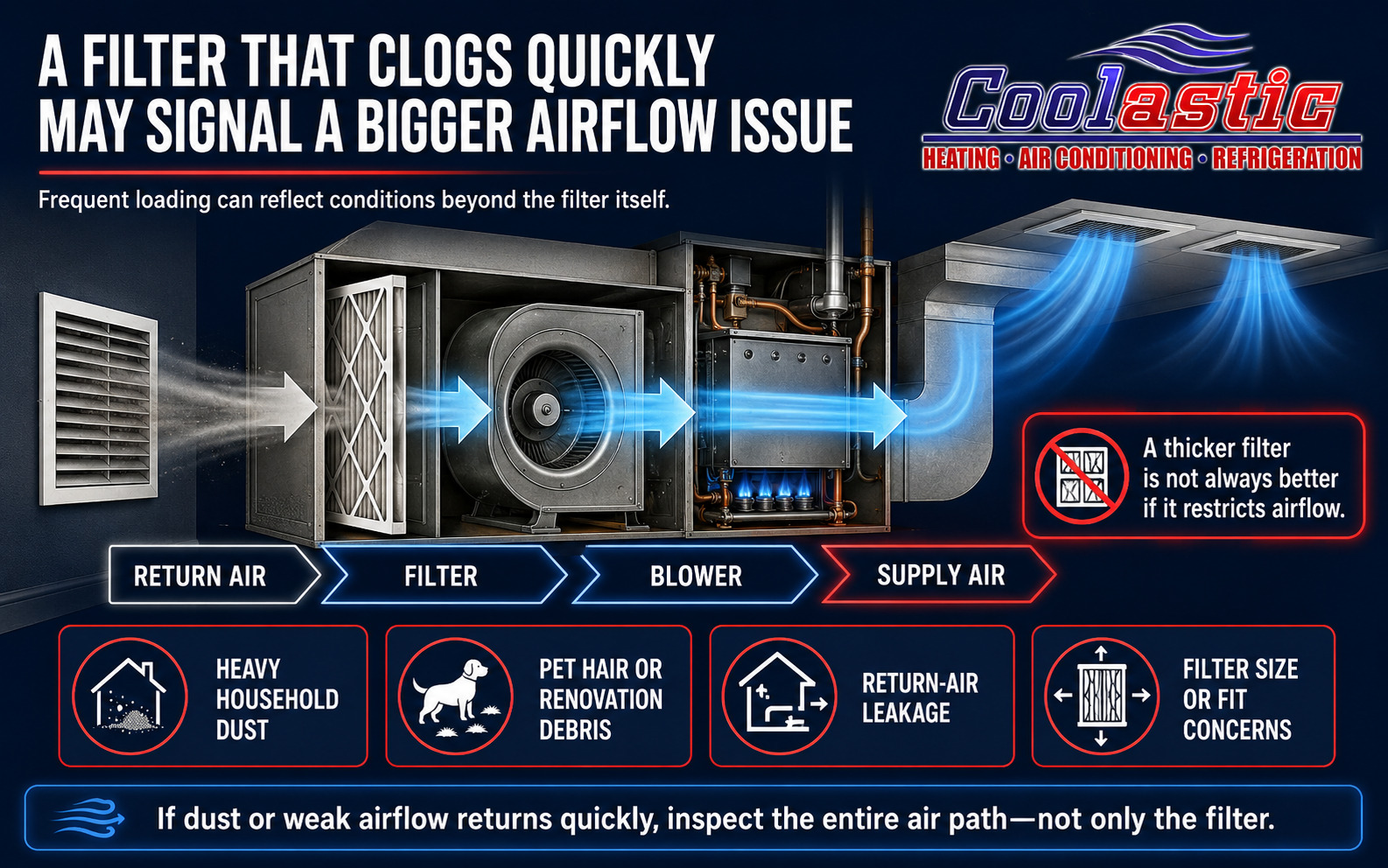
A filter that clogs quickly can point to heavy household dust, duct leakage, renovation debris, pet hair, or an undersized filter setup. It can also increase resistance and reduce airflow.
Ask whether the filter type and replacement interval match the system. A thicker filter is not always better if it restricts airflow.
Key Takeaway
Fast filter loading may reveal a larger airflow or dust issue, not just a need for more frequent replacement.
Watch for Dust That Returns Quickly
If supply registers become dusty again soon after cleaning, the issue may involve return-air leakage, dirty duct sections, nearby construction dust, or airflow patterns in the home.
Cleaning the furnace is useful, but the entire air path may need to be considered when dust returns immediately.
Look for Signs of Overheating Along With Dirt
Short cycling, unusual hot smells, weak airflow, or frequent limit trips can point to more than dust buildup. Restricted airflow, blower problems, or control issues may also be involved.
Those symptoms deserve inspection rather than repeated cleaning alone, especially before winter demand increases.
Use a Preseason Furnace Checklist
A simple heating-season checklist can help homeowners catch issues early and decide when professional service is needed.
Before Heating Season
Replace or inspect the filter.
Clear storage away from the furnace.
Check thermostat operation.
Listen for new startup noises.
Verify airflow at several vents.
Schedule service if symptoms appear.
Key Takeaway
Preseason furnace cleaning works best when it includes airflow checks, filter review, safety awareness, and inspection for unusual symptoms.
Ask What the Cleaning Service Includes
Not every maintenance visit includes the same work. Ask whether the scope covers the blower area, burner inspection, filter review, electrical checks, temperature rise, and visible combustion concerns.
Our complete HVAC servicespage can help you compare related service options.
Use Cleaning Results to Set Future Maintenance
The amount of dust found during service can help shape future maintenance. A home with pets, recent remodeling, frequent filter loading, or heavy seasonal use may need closer attention than a low-dust property.
Ask the technician what was found, whether airflow improved, and what should be monitored before the next visit. A useful recommendation should be based on system condition, not a generic schedule.
Furnace Cleaning FAQs
How often should a furnace be cleaned?
Frequency depends on equipment condition, dust levels, filter performance, usage, and manufacturer guidance. An annual heating inspection is a practical starting point for many systems.
Can a dirty furnace reduce airflow?
Yes. Dirty filters, blower buildup, and restricted return paths can reduce airflow, although duct or mechanical problems may also contribute.
Is a burning smell always dangerous?
A brief dusty smell at first startup can occur, but persistent burning odors, smoke, or electrical smells should be inspected promptly.
Can homeowners clean furnace burners?
Gas-burning components should be handled by qualified professionals because improper service can affect ignition and combustion safety.
Does cleaning improve heating efficiency?
Cleaning can help when dirt restricts airflow or affects operation, but heating efficiency also depends on equipment condition, controls, ductwork, and maintenance.
Prepare the Furnace Before Winter Demand Increases
If you are consideringfurnace cleaning, use the appointment to review airflow, blower condition, burner performance, and visible safety concerns together.
Book your furnace servicewith Coolastic Heating & Cooling Services for experienced HVAC support, licensed and insured technicians, 24/7 availability, and clear service options.